
Green Infrastructure for a Healthy Watershed

In natural landscapes, most rain soaks into the soil, and some flows gently across the land to streams, helping recharge groundwater and maintain healthy ecosystems.
However, in developed areas, hard surfaces like roofs, roads, and parking lots disrupt this natural cycle, causing stormwater runoff. Water runs off quickly, overwhelming storm drains and carrying sediment, nutrients, road salt, oil, and other pollutants into streams — and eventually into Shediac Bay.
As rainfall becomes heavier and more frequent, flood risks increase and existing infrastructure faces growing pressure. Relying only on pipes and culverts is costly — and often not enough.
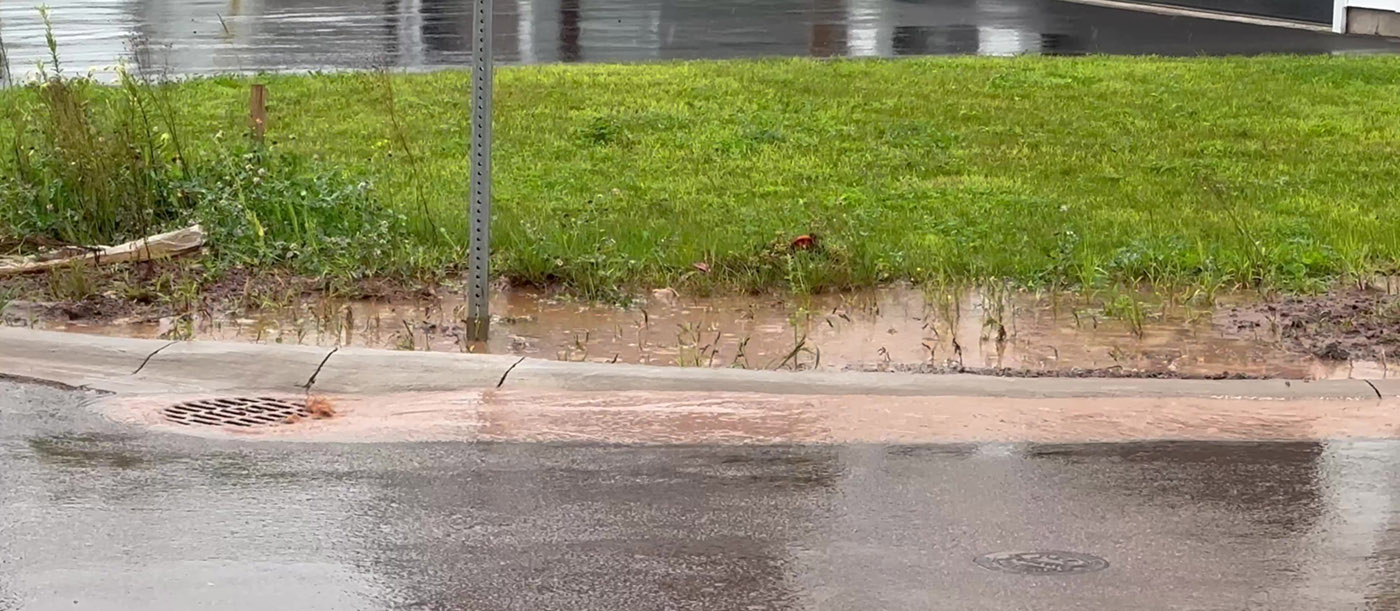
Stormwater runoff often carries pollutants such as petroleum products, pet waste, fertilizers and pesticides.
Green Infrastructure – A Nature-Based Approach in the Shediac Bay Watershed
Protecting water quality is essential to the region’s economy — including fisheries and tourism — and to the overall quality of life in our communities.
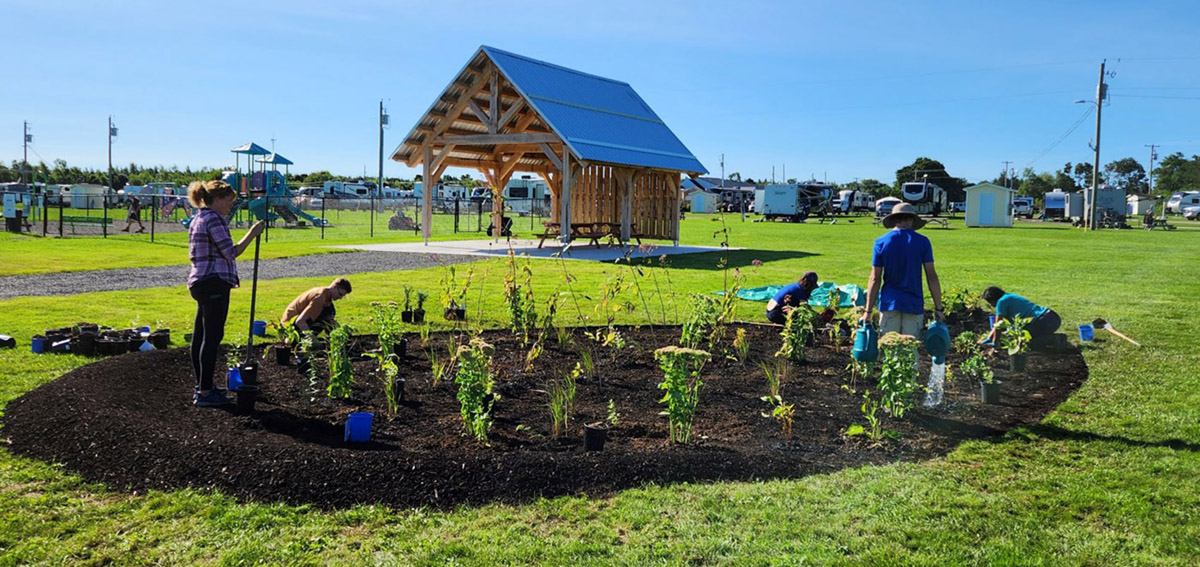
The Shediac Bay Watershed Association (SBWA) promotes natural stormwater management practices across the watershed. Often called green infrastructure or Low Impact Development (LID), these approaches are inspired by nature.
They manage rain close to where it falls by capturing it, allowing it to soak into the ground, and returning water to the atmosphere through evapotranspiration (evaporation and plant transpiration).
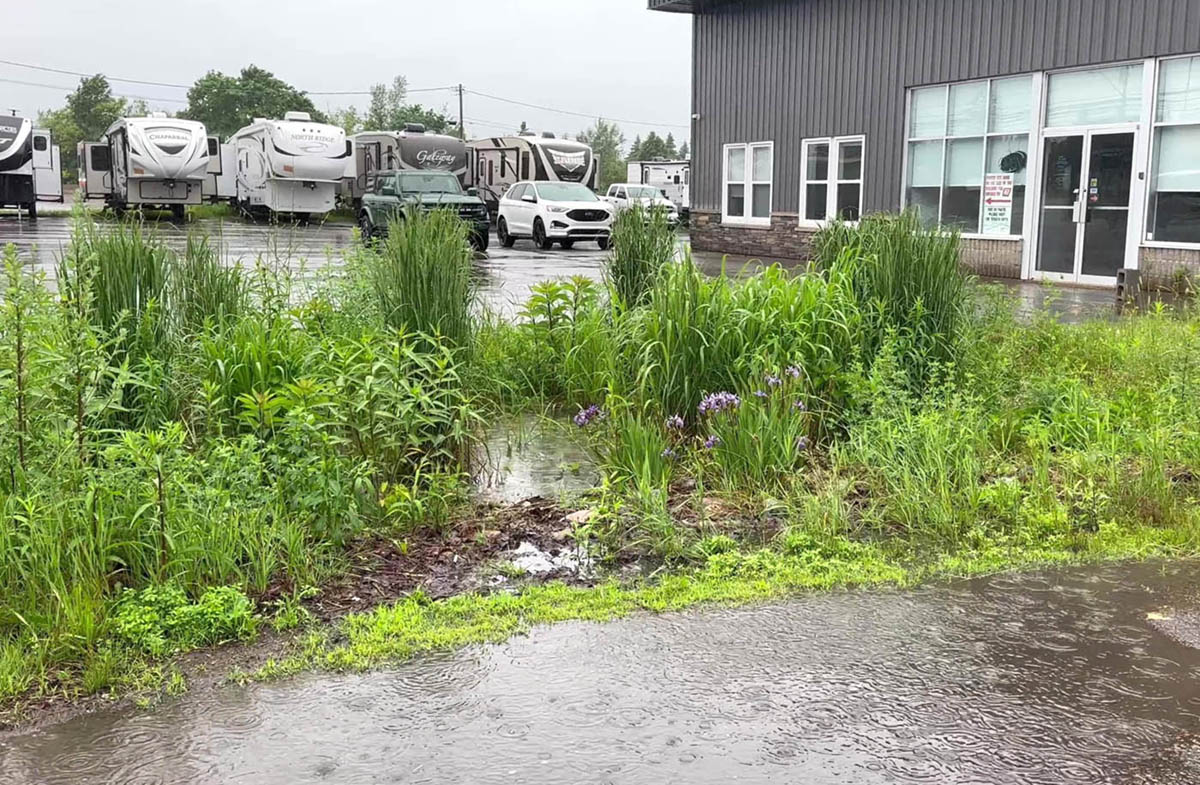
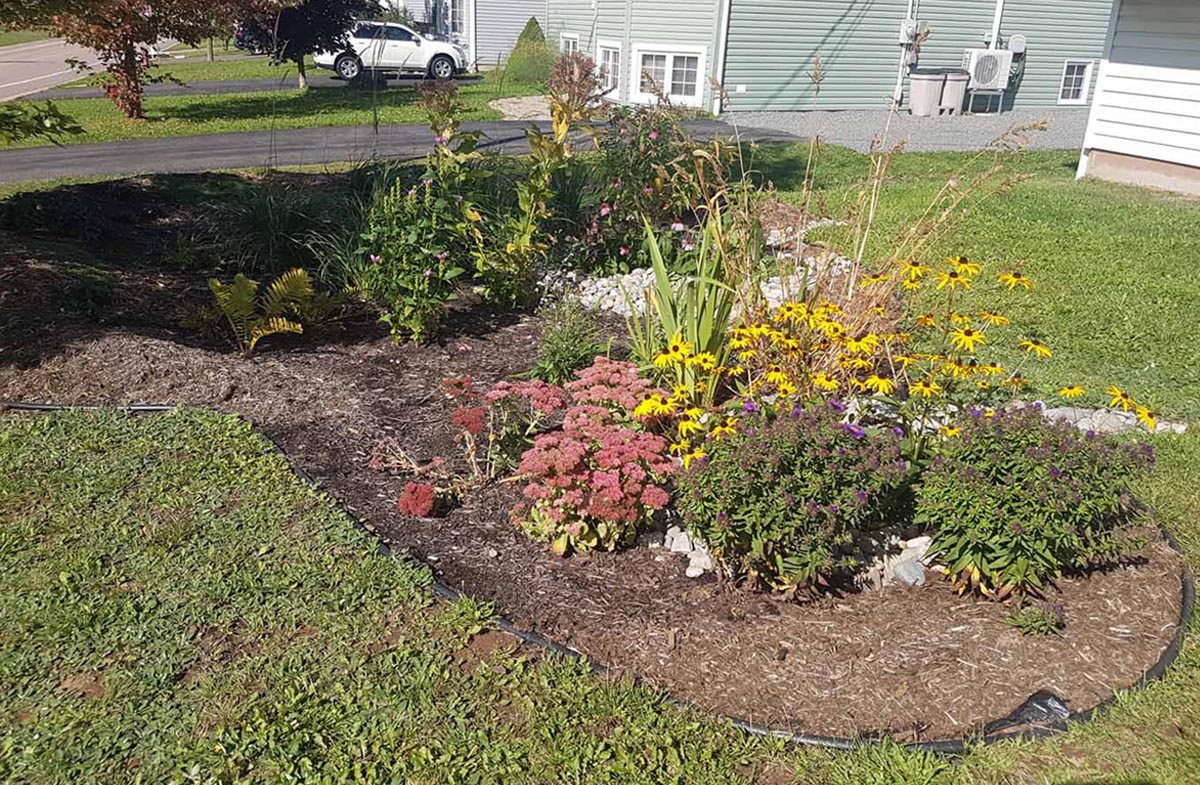
When green infrastructure systems are installed in a community, they help clean the air and water and add significant value by protecting against flooding, creating diverse habitats and adding beautiful green spaces.
Unlike conventional “grey” systems that move water away quickly through pipes and drains, green infrastructure treats stormwater at its source using soil, plants, and natural landscape features. While it cannot replace traditional systems entirely, it strengthens them. Together, green and grey infrastructure improve performance, reduce long-term maintenance costs, and increase resilience to climate change.
How Green Infrastructure Works
Green infrastructure slows, absorbs, and filters rainwater before it reaches waterways. When implemented across a watershed — on private properties, along streets, and in shared spaces — individual actions combine to reduce erosion, lower flood peaks, and improve water quality.
These solutions also create cooler neighbourhoods, healthier air, more wildlife habitat, and more attractive public spaces.
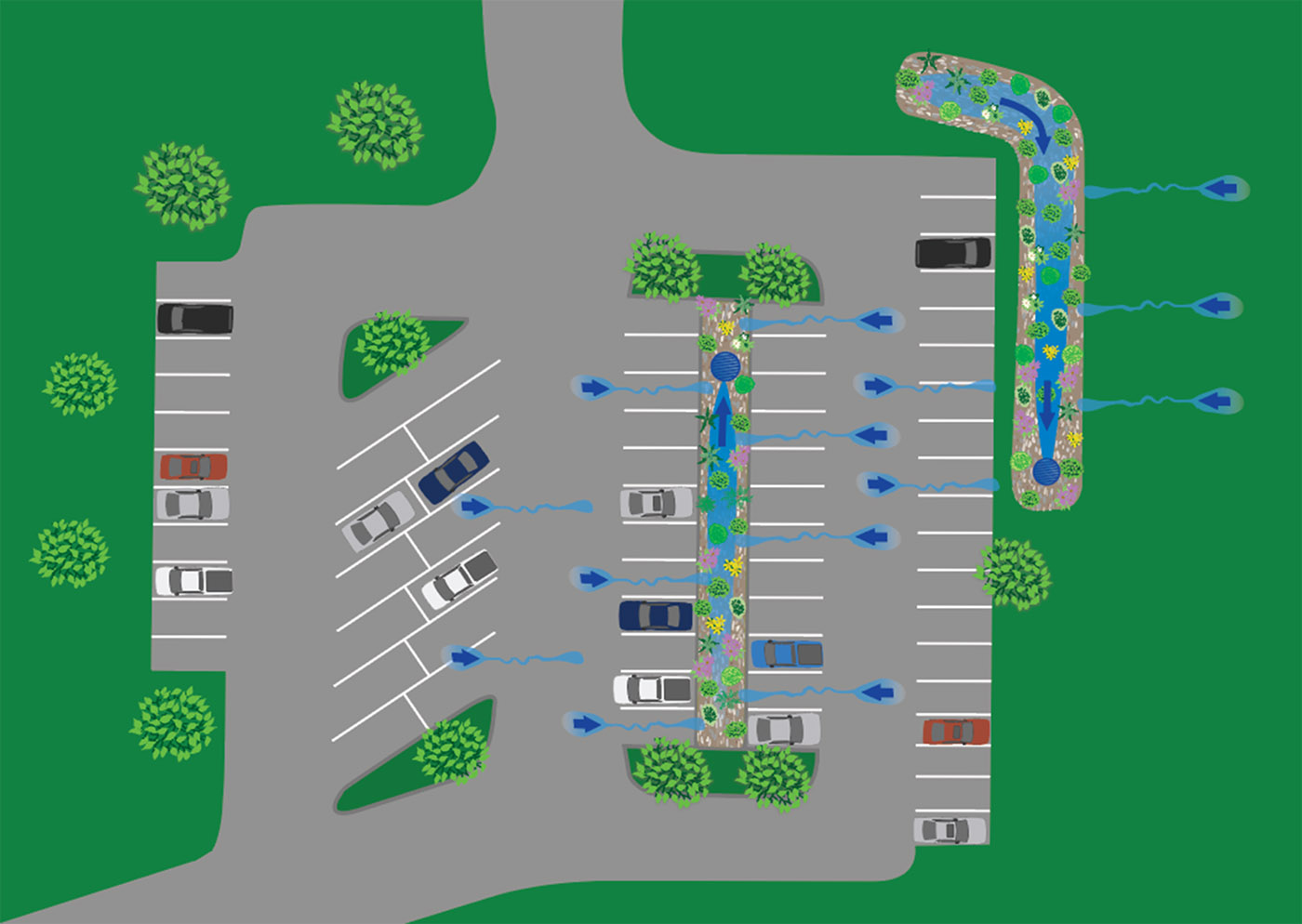
By adopting green infrastructure techniques that mimic the natural landscape, rainwater and snowmelt can be collected from roofs and parking lots for later use or diverted to bioswales and rain gardens, where it will infiltrate into the ground and replenish the aquifer instead of flowing into local storm drains and waterways.
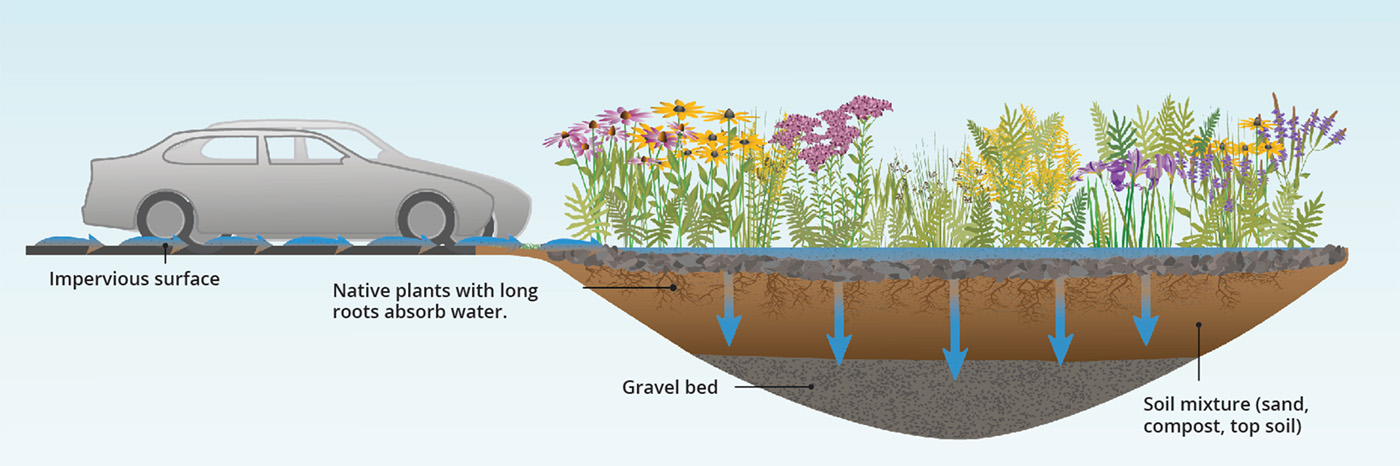
Pollutants in the parking lot are transported to the vegetated system, where they are eventually broken down.
Green Infrastructure Benefits
Designed to manage rain, green infrastructure also delivers environmental, social, and economic benefits:
- Filters pollutants from runoff
- Improves water quality in streams and the bay
- Reduces flooding and streambank erosion
- Recharges groundwater
- Reduces sewer overflows and peak flows
- Supports birds, pollinators, and biodiversity
- Lowers urban heat and improves air quality
- Enhances green space and community well-being
- Increases property value
Making Space for Rain in Our Community
Green infrastructure can be integrated into homes, neighbourhoods, and public spaces throughout the watershed. The illustration below highlights practical ways we can slow rain down, soak it in, and protect Shediac Bay — together.
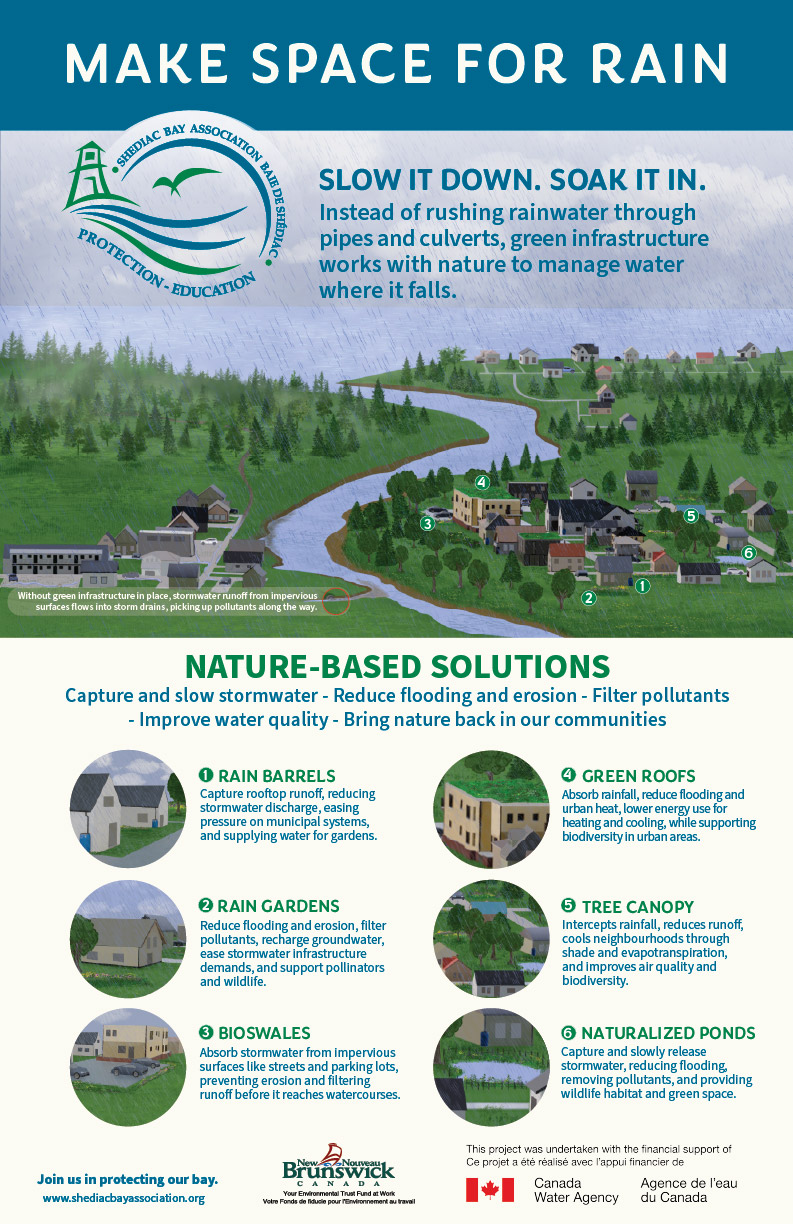
Click this LINK to view or Download in pdf format
SBWA Green infrastructure projects over the years
Effective stormwater management, whether implemented at home or in public spaces, reduces the volume and velocity of stormwater runoff by promoting its absorption into the ground throughout the territory. Click areas on the map to view accomplished SBWA Green infrastructure.
From a waterlogged yard to a thriving ecosystem — Read it straight from Rain Garden enthusiasts.
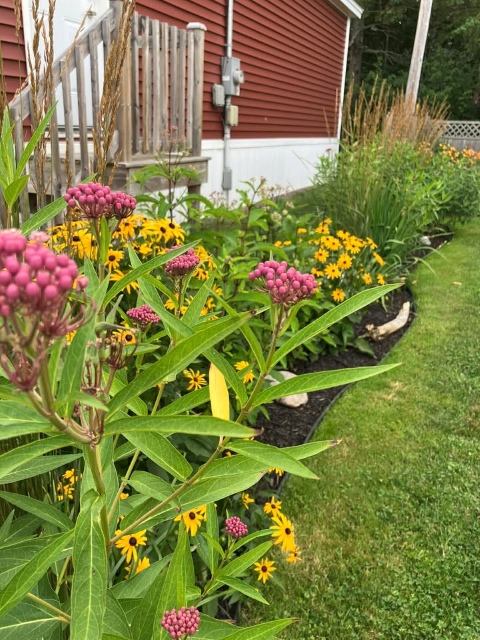
Sara
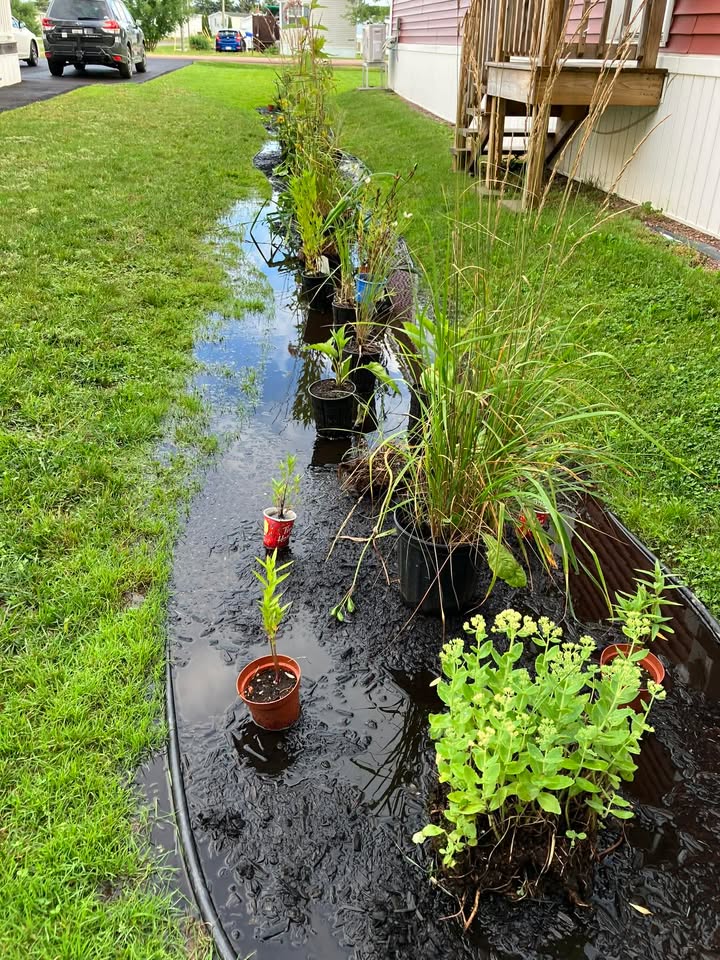
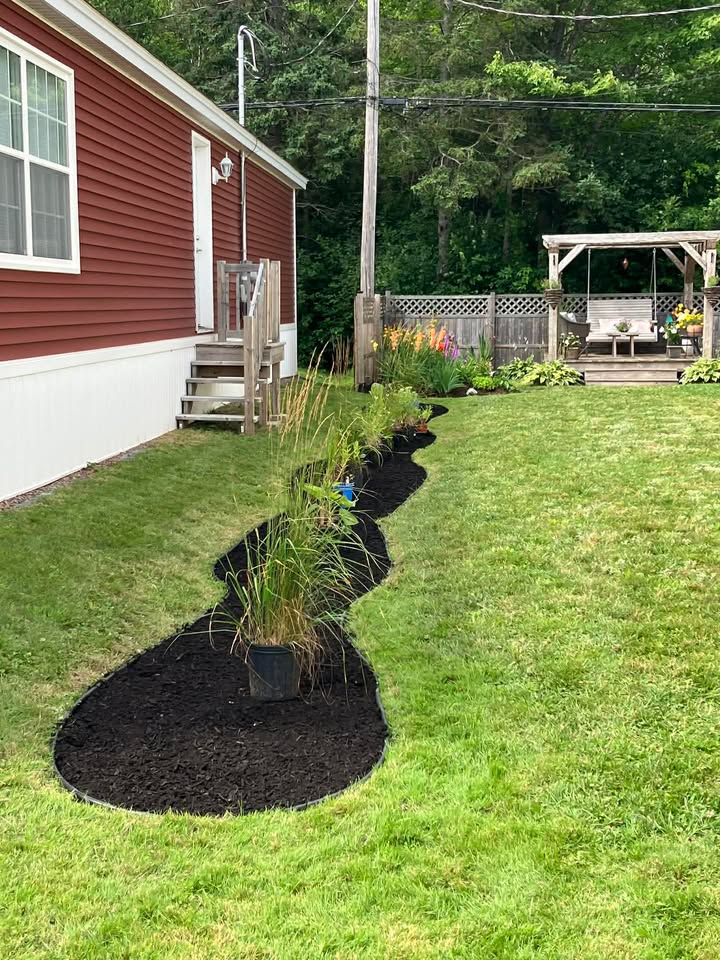
Sara, a Grand-Pré Street resident, shares how a rain garden transformed her property: reducing pooling water, attracting monarch butterflies and bumblebees for the first time, and turning her yard into a space she genuinely loves spending time in.
Here are answers to the questions we asked her about her Rain Garden
Have you noticed any improvement in standing water or drainage?
Yes, we have noticed improvements in the drainage of pooling water on our property. There is still some standing water remaining; however, we think this is due to the size of the rain garden and are looking forward to expanding it this coming summer.
How did your property handle heavy rain before the rain garden?
There was little to no drainage of rainwater, and there was pooling on most of our property surrounding the location of the rain garden.
Have you seen an increase in pollinators like bees and butterflies?
Yes, we have seen a significant increase in pollinators such as bumblebees and monarch butterflies. There are so many bees in the rain garden that we can hear them buzzing as we walk past and see their pollen pouches full!
Let’s not forget all the beautiful monarch butterflies, other insects, and birds that the rain garden attracts.
Are there any species you’ve observed that weren’t there before?
We did not have monarch butterflies prior to the rain garden. It was beautiful seeing our first one up close.
Has the garden changed how you feel about your yard and outdoor space?
Yes, it has. We are in love with our property and all the wildlife that is present. We love admiring it. Since the addition of the rain garden, we enjoy going outside to see and hear the pollinators and other wildlife.
Do you have a favourite plant or feature in your garden?
This is difficult to answer, as they are all beautiful. We love how the iris blooms earlier in the spring and the aster later in the summer. We have colours and flowers from spring through fall. However, our favourite plant has to be the milkweed because of the pollinators it attracts and its subtle yet distinct vanilla scent. As a bonus, if you look closely at the milkweed flowers, they seem like they have little faces!
We couldn’t be happier with our rain garden and the outcome. We thank the Shediac Bay Watershed Association for considering us and allowing us to be part of such an amazing project.

Paul & Hélène
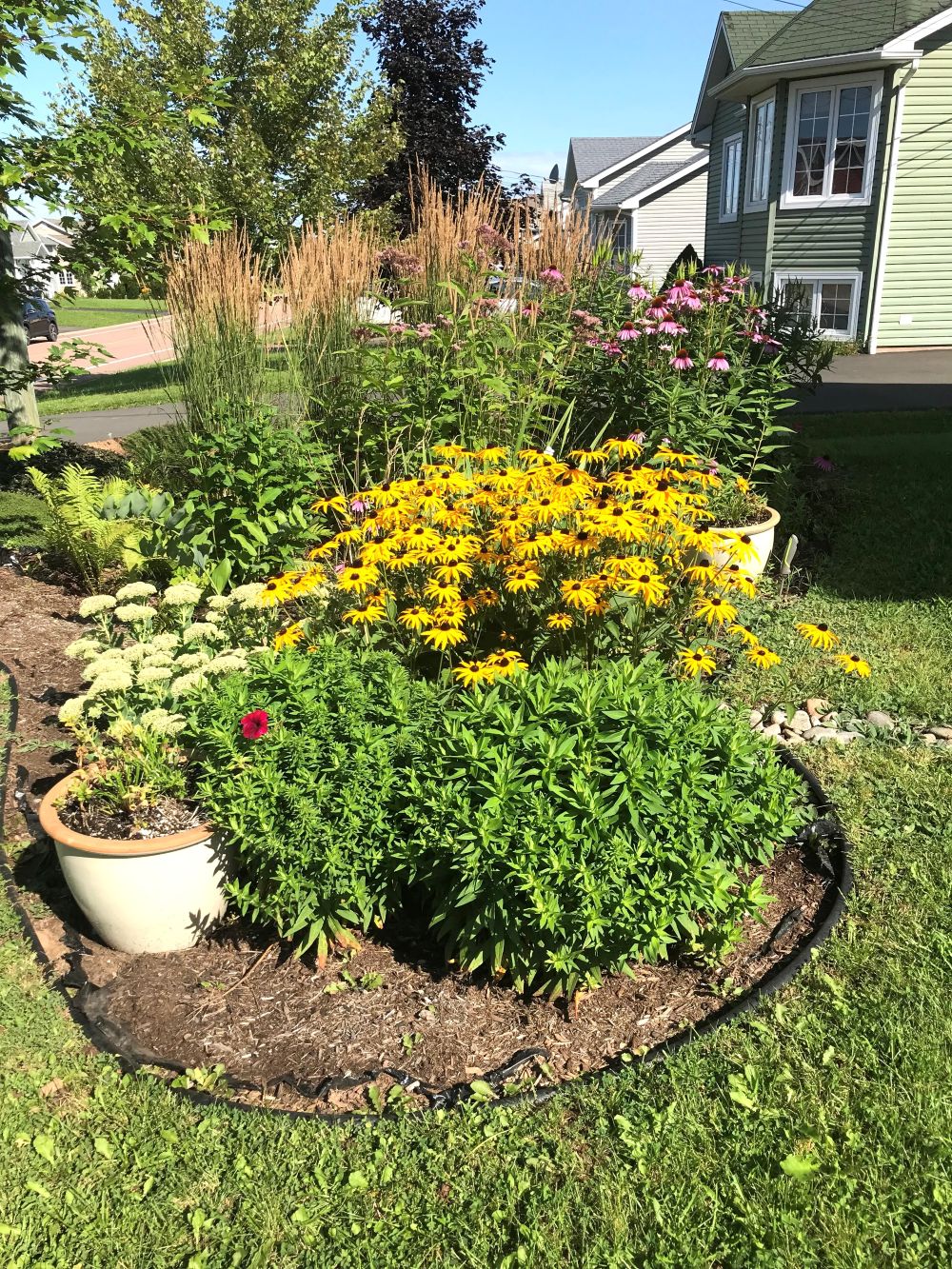
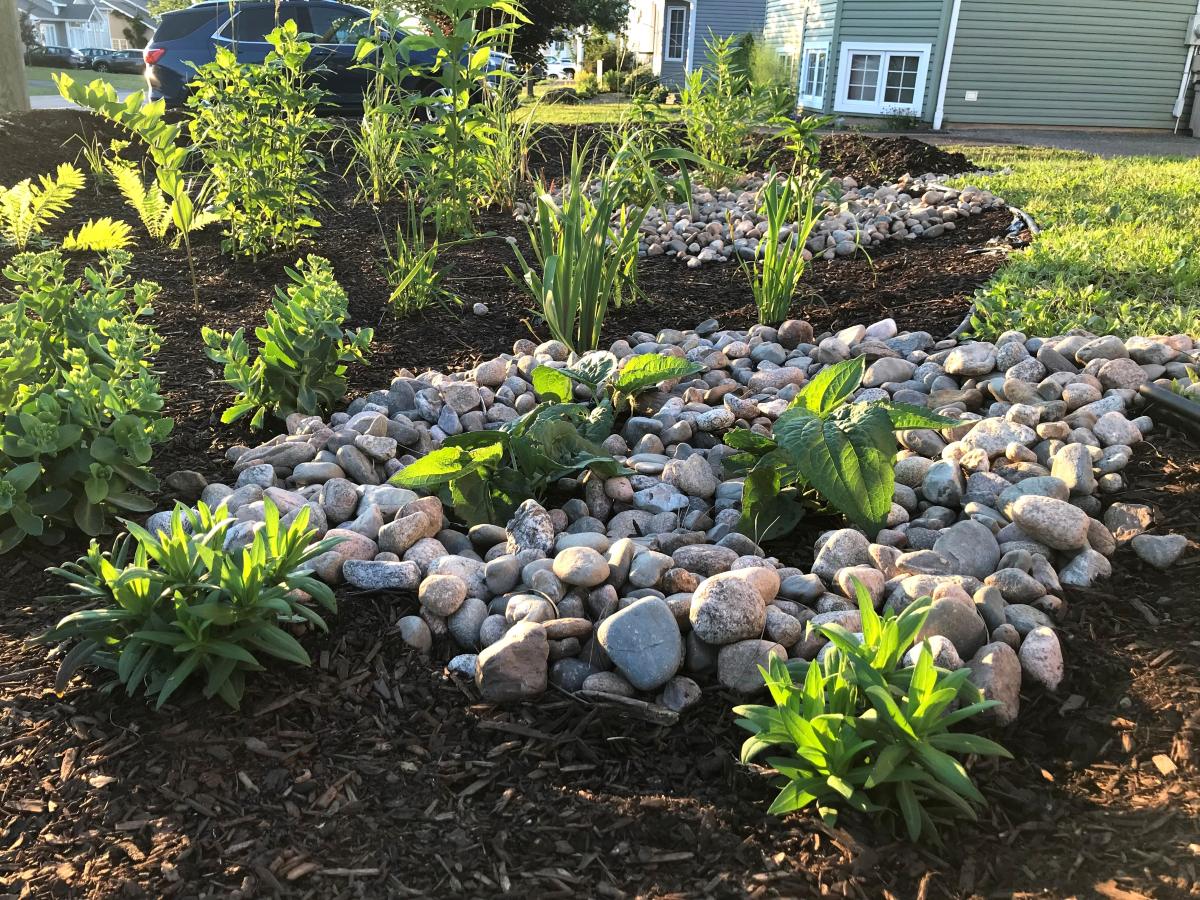
Paul and Hélène, residents of Shediac, share how their rain garden went from solving a drainage problem to becoming a daily source of joy — attracting hummingbirds, dragonflies, and warblers, while helping protect the coastline they love. They imagine Shediac becoming the “place of beautiful rain gardens by the sea” and a model of how a community embraced beauty and learning how to live with nature to solve a problem.
Here are answers to the questions we asked them about their Rain Garden
Have you noticed any improvement in standing water or drainage?
All the water that used to gather in our front yard during and after a heavy rain is now in the rain garden. It quickly sinks into the ground in the rain garden leaving no evidence of the rainfall. Formerly, the yard would be soaked for several days.
How did your yard/property handle heavy rain before the rain garden?
Before the rain garden, water from our roofs would fill the yard and driveway and overflow into the street and down into the sewers.
Have you seen an increase in pollinators like bees or butterflies?
The plants attract butterflies and bees.
Are there species you’ve observed that weren’t there before?
Because some of the plants are native to the region and create a habitat, many birds and others that had no reason to visit before we built the rain garden, now regularly hop in for a visit including hummingbirds, robins, dragonflies, wrens, warblers and sparrows. They visit throughout the spring, summer and fall as the plants grow, bloom and go to seed. This daily connection to critters and plants during the changing seasons of nature brings peace and wonder to our lives. This comfort and joy we feel by connecting to nature in our rain garden cannot be measured.
Has the garden changed how you feel about your yard or outdoor space?
The rain garden has transformed a section of uninteresting lawn with a vibrant community of beautiful plants, unexpected visits from birds and pollinators that delight our souls. Our grandchildren love to wander around the plants and find the tall grasses a magical place for hide and seek. The plants and grasses are an oasis of natural beauty and wonder. The joy the rain garden brings a special joy and comfort every time we visit it at home and, interestingly, every time we come back home and are welcome by its colours and beauty.
Do you have a favourite plant or feature in the garden?
We love the tall grasses and the way their nodding tells me the strength and direction of the wind. The coneflower is a sturdy favourite and it’s wonderful to discover where it chooses to find new places to grow! I love to have the iris nearby as its violet radiance announces spring.
More:
We love the rain garden because I know it addresses street run-off, which is a major source of contamination of the ocean along our coast. No one likes the idea that runoff from our streets pollutes our beaches. Often, it’s difficult for us to connect the dots between the contaminated beaches and the hard surfaces that we live under and beside that have replaced the absorbent forests that used to hold the ground where we live. Once we connect the dots and realise that choosing the beauty of a rain garden in our front yards can be part of the solution, it seems like a worthy thing to do. Once many neighbours participate, one can imagine that Shediac will add another layer to her beauty and become the “place of beautiful rain gardens by the sea” and a model of how a community embraced beauty and learning how to live with nature to solve a problem.
Also, the rain garden is a great opportunity to get children to learn about nature: names of plants, the rhythm of nature, and the seasonal changes of nature. They know why we have a rain garden, to make the run-off water cleaner. Land-based education is so important! Our little ones love the rain garden. They know we do not pick the flowers because they are for insects and butterflies, so also learning about interconnections. At the same time, they know the names, and they help trim them when it is time, and pick out the leaves from the maple tree beside our rain garden, when there are too many (we do leave some for compost). They especially love the tall grasses.
Contact us to learn how you can implement green infrastructure on your property.
This project was supported by provincial and federal funding.